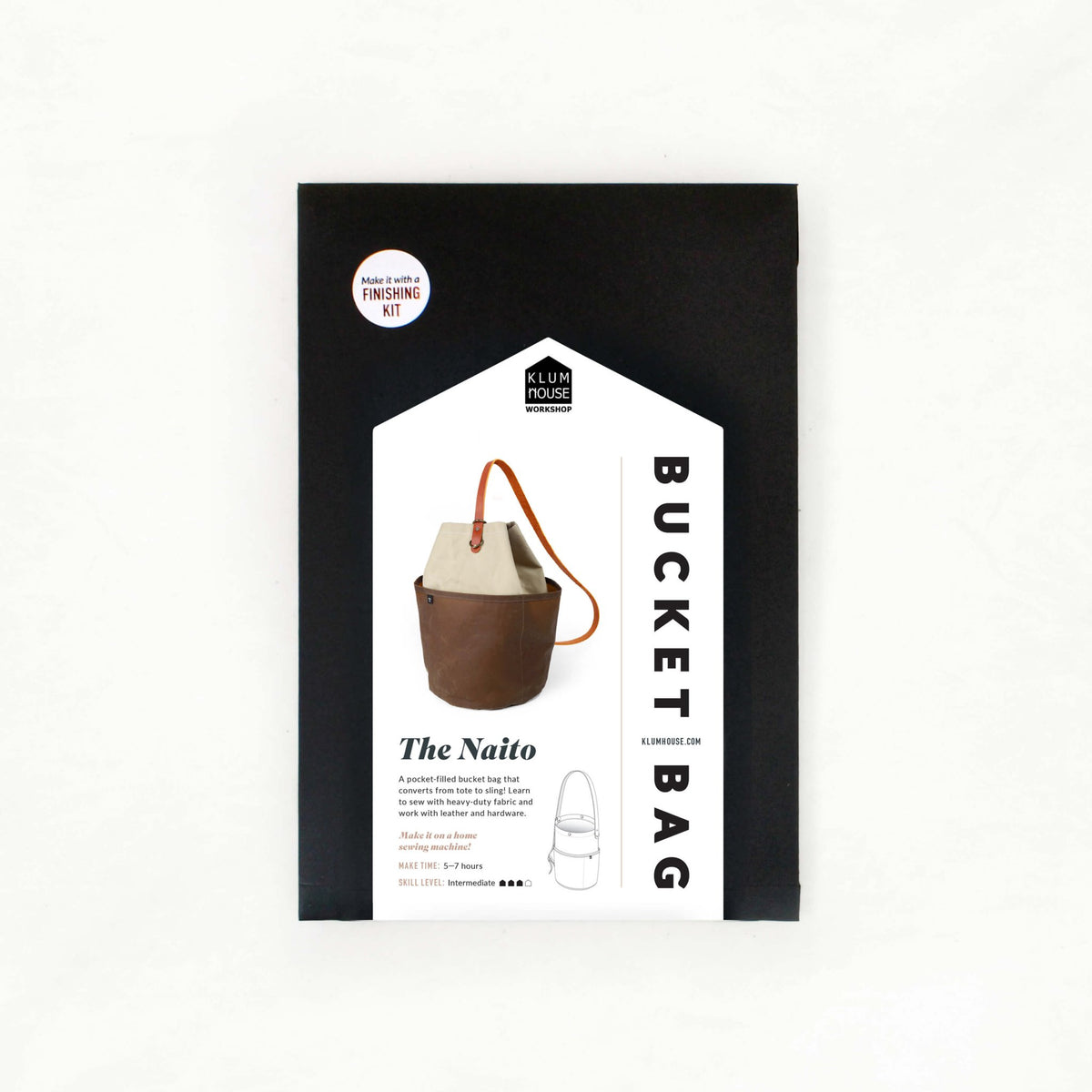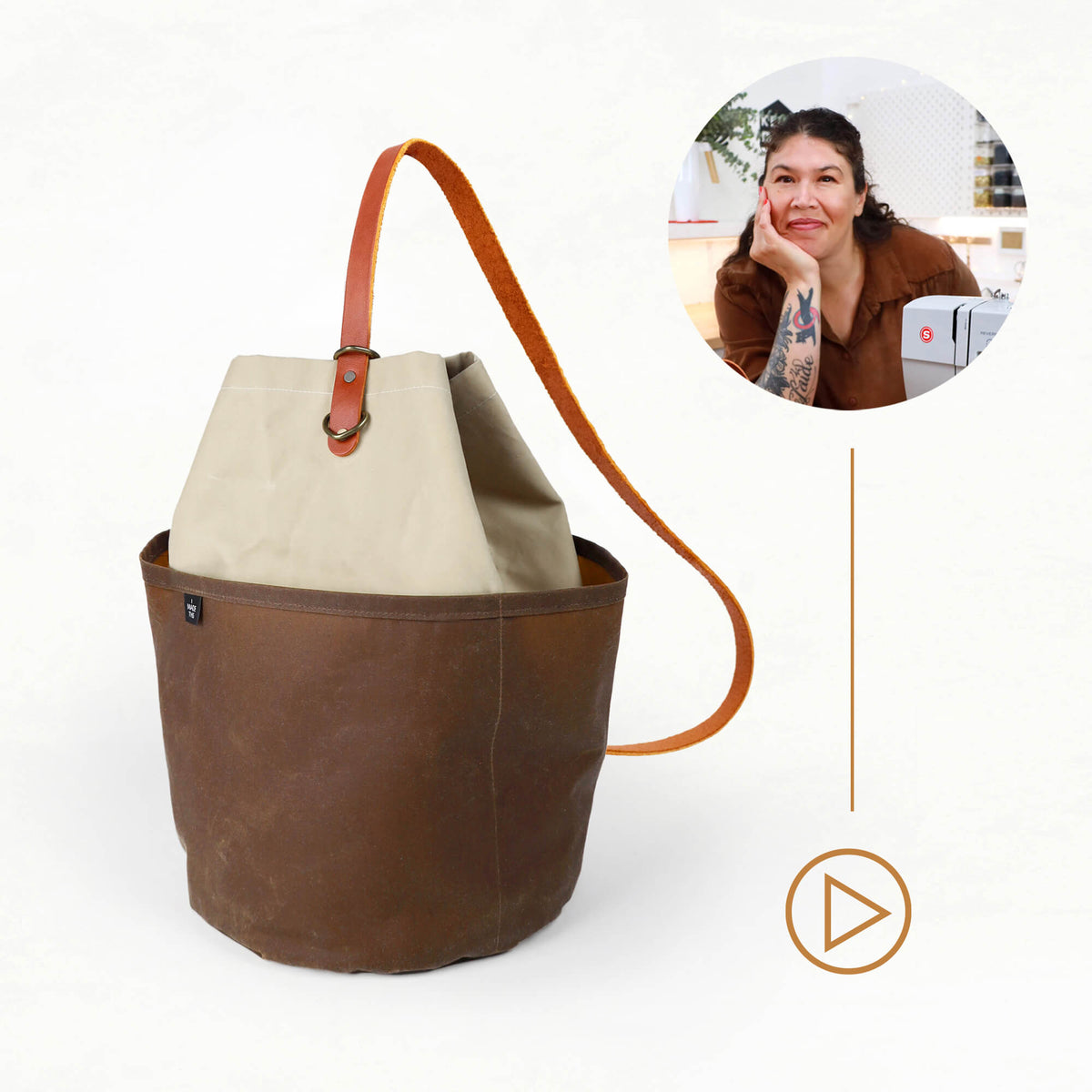
I wanted to make a bag that had hopeful days in mind. Something to keep you light on your feet, carry a few essentials, sling over your shoulder and go out and do stuff.
This convertible bucket bag is an idea I’ve had brewing in the back of my mind for ages. When I finally sat down to design it, the very first sample came out nearly perfect. I’ve been designing bags for 25 years, and that almost never happens. Every once in a while a design just emerges—and that’s how you know you’ve got to go with it.
What Inspired the Naito?
As a tool-lover and person who has spent many hours of my life building shit, I’ve always had a soft spot for tool bucket organizers. What’s a bag if not a tool bucket organizer for your everyday life? You need your phone and your pens and your sunscreen and your snacks and your Advil and your spork! The Naito’s got a pocket for everything.

The Naito is a 360-degree pocket palace, inside and out. No more rummaging around in the depths of your bag, searching for that granola bar you KNOW is in there! This bag has a designated place for everything, even a couple of pen pockets and one sized to carry your phone. Think tool belt, inside your bag.

“I think it looks super chic and rugged and adventure-y (Indiana Jones meets on-the-go maker??).”
—@rachelbeckman
I was also inspired by the traditional Japanese fisherman’s bag, which cinches closed when you pull the strap. It’s such a clever closure device. With the Naito, the magnetic snap in the center of the bag makes the fabric fold up into elegant pleats when cinched closed. It’s definitely my favorite feature of the bag. It feels like a magic trick!
If you’ve ever made the Maywood Totepack, you’ve set one of these before. With the right tools they’re super easy to set, and the two sides find each other and click right into place. ▶️ Here’s how to set a magnetic snap rivet.

Who Is the Naito Named After?
Did you know that all of the bags in the Klum House collection are named after places here in Portland, Oregon? The Woodland, the Oberlin, the Maywood—take a drive around Portland and you’ll find them all on street signs! It’s a way for us to pay homage to the creative, maker-filled city we call home. With the Naito, we felt compelled to dig deeper into the story behind the street name. In doing so, we learned about a man named Bill Naito, for whom Portland’s Naito Parkway is named, and were blown away by his story.


William (Bill) Naito was a Japanese American born in Portland in 1925. During World War II, when Portland became an “exclusion zone,” forcing Japanese Americans out of their homes, Bill and his family fled to Salt Lake City to avoid internment. He later returned to Portland and went on to become a civic leader, philanthropist, and noted businessman. His many contributions to Portland’s cultural landscape include donating space to start Portland’s Saturday Market, a popular arts and crafts market that has been held continuously since 1974; helping create Portland’s Lan Su Chinese Garden; founding the Made in Oregon store in 1975; and preserving the iconic neon Portland sign in the 1990s.
Until recently, we drove down Naito Parkway, past the lit-up Portland sign, and strolled through the Saturday Market without knowing anything about the amazing person we have to thank for so much of it. Sometimes when you pull on one little thread, a whole beautiful story unravels. In naming this pattern the Naito, we hope to shine a light on Bill Naito’s story and this inspiring sliver of local history.
What Will You Learn Making the Naito?
This is the first project I’ve designed that teaches makers to sew on a curve. It’s a next-level sewing skill. With the Naito, I felt ready and excited to take on that challenge. We’ve spent a lot of time crafting clear instructions and breaking it all down in our online class. Y’all are going to be sewing in circles in no time.
One of the coolest skills you’ll learn from this pattern is how to sew in circles. You rotate the bag around the machine as you attach the circular base.

Here’s a little secret: even people who have been professionally making bags for twenty+ years make mistakes! A wobbly stitch, a crooked snap—it happens to ALL of us. Just par for the course. One of the cool things about the Naito is that it’s actually a really forgiving pattern. If the stitch around your circular base is a little wobbly—no one will ever know! You just turn that baby right side out, and it’ll look great. I promise.
“Don’t let the circle bottom intimidate you — Ellie has a perfect way to sew this together!”
—Anita T.
The Naito sits right in the middle of the collection — past beginner bag making, not as demanding as the Slabtown.
How Did Size Inclusivity Shape the Naito?
Bags, like garments, are not one-size-fits-all. No one should have to wear a bag with uncomfortable straps, or forego a fun project because the finished product isn’t functional on their body.
When it came time to design the Naito, we knew from the beginning that we wanted to integrate an optional extended strap. Leila of Muna and Broad, who make sewing patterns for plus-size sewists, was kind enough to offer feedback on sizing and language, and together we arrived at an offering we felt good about.
So the strap is adjustable, custom-fit to your body, and if the standard length isn’t right for yours there’s a longer one. Size Inclusivity in Bag Making tells the whole story, and walks you through which strap length is right for you.

Want to Make the Naito?
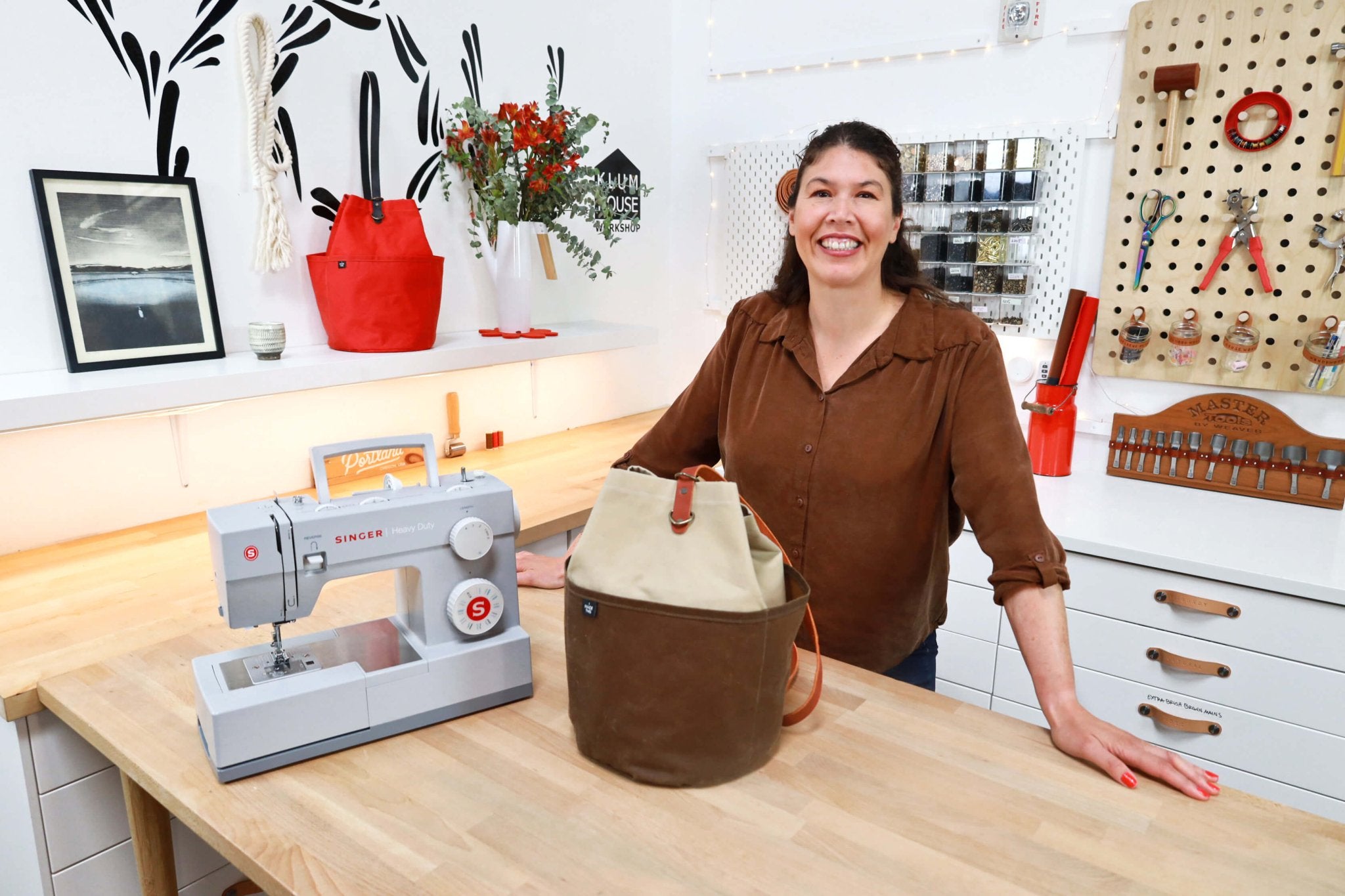
Whenever we launch a new bag here at Klum House, our goal is always to create more than just a “pattern.” We want to create a fully-supported making experience. If you’re gearing up to make the Naito, I’ll be your trusty guide, your rivet-setting cheerleader, your anti-perfectionism coach, and your comic relief.
XO Ellie
Naito Bucket Bag


“I loved putting this together - but even more so, I LOVE using it!”
—@lladybird
About the Author