


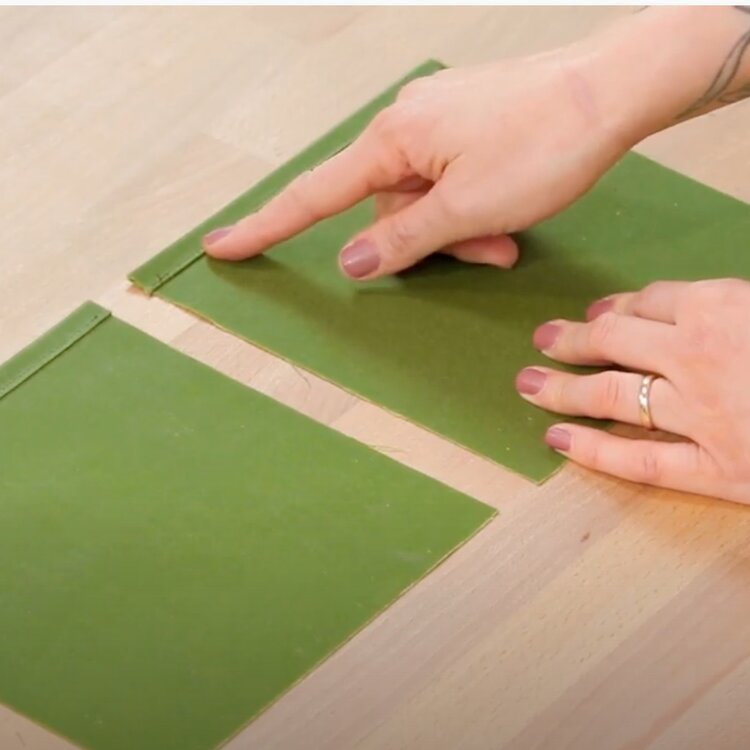
A topstitch is a strong, decorative stitch that is visible on the outside of your bag and helps create a really professional finished product.
There are two ways to sew a topstitch on a home machine. The traditional way uses real topstitching thread. Our way uses two spools of ordinary all-purpose thread run through a single needle, and it’s the one we reach for, because it works on more machines.
The Slabtown Backpack calls for topstitching, so Ellie made this video walking through both.
What Is Topstitching?
Topstitching is a line of straight stitching sewn on the right side of your work, where it shows, after the seam underneath is already sewn. It’s doing two jobs at once.
It holds your layers down flat, which is why a topstitched hem stays put instead of rolling. And it draws a visible line along the edge of your work, which is most of what your eye reads as “finished” when you look at a bag.
The stitch itself is nothing special. What makes it a topstitch is that you meant it to be seen, so it’s sewn a little longer, a little heavier, and where it shows.
Our Method: Two Spools of All-Purpose Thread
At Klum House, our preferred method of topstitching is a bit of a hack! We find that it yields the highest success rate on the widest range of machines.
Here’s how it goes. Add a second spool of all-purpose thread to the second spool holder on top of your machine. Treating the two threads as one, thread the machine with both, and put both through the eye of a topstitching needle. The bobbin thread stays regular all-purpose. Change your stitch length to 3 mm and stitch as normal.
Two threads sitting side by side read as one thick line. You get the weight of a topstitch without asking your machine to pull a heavier thread through a tension system that was not built for it. That’s the whole trick, and it’s why we call it two spools on top.
To use our suggested method of topstitching, you’ll need TWO spools of all-purpose thread to match each fabric on your bag!
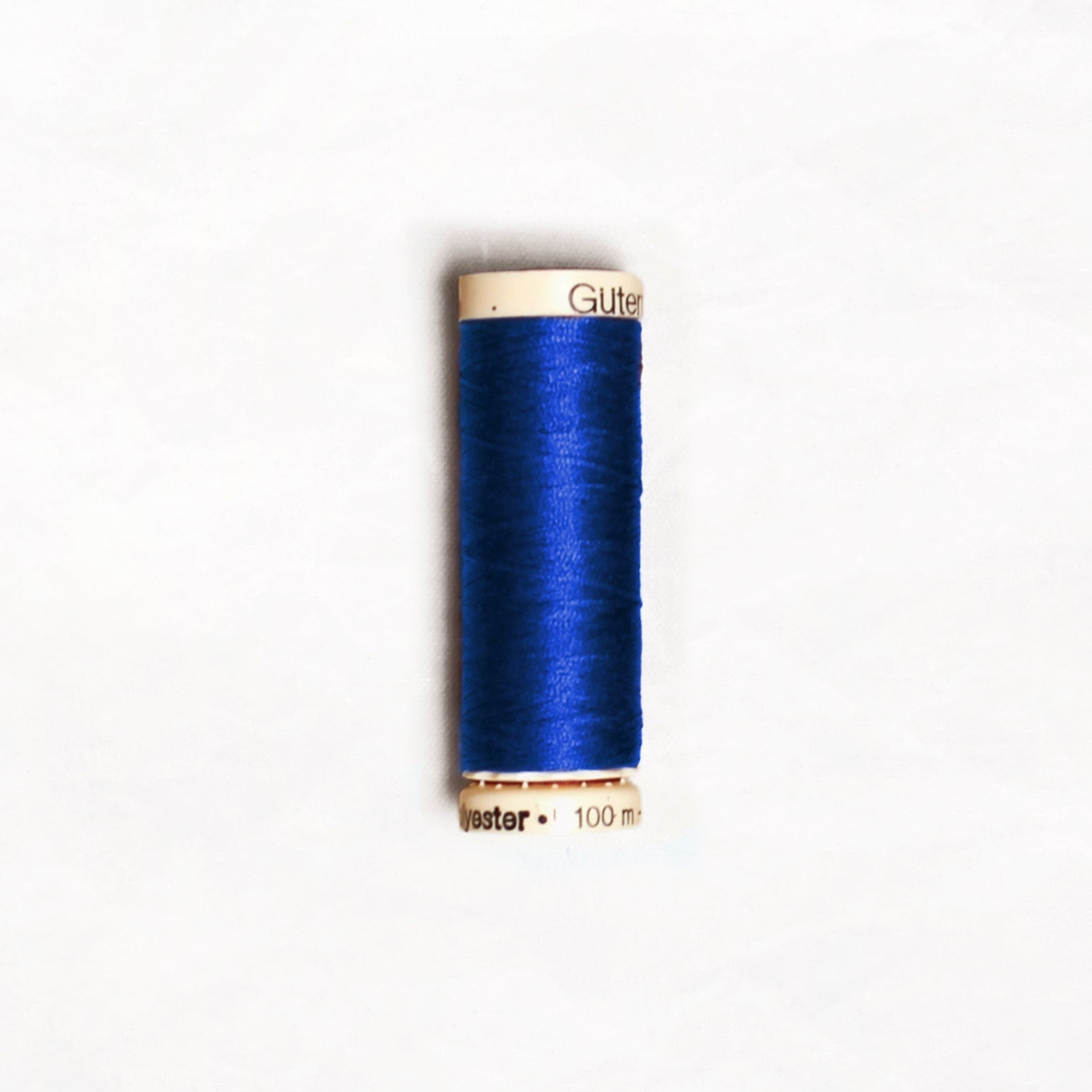
The Traditional Method: Real Topstitching Thread
The traditional way is exactly what it sounds like. One spool of topstitching thread on top, a topstitching needle, all-purpose thread in the bobbin, stitch length to 3 mm, stitch as normal.
It works, and on a machine that’s happy with it the result is lovely. Topstitching thread is genuinely thicker, so you get a bolder line than two all-purpose threads will give you.
The catch is that thicker thread asks more of your machine. It has to travel through the tension discs, around the take-up lever and through the needle eye without shredding, and some machines just don’t like it. That’s the whole reason we ended up with the two-spool method in the first place.
Which One Should You Use?
| Method | What you need | Best for |
|---|---|---|
| Two spools on top | Two spools of all-purpose thread per fabric, topstitching needle | Almost everyone. Highest success rate across the widest range of machines |
| Topstitching thread | One spool of topstitching thread, topstitching needle, all-purpose in the bobbin | A bolder line, on a machine you already know handles thick thread happily |
Both use a 3 mm stitch length. Both use a topstitching needle. The only thing that changes is what’s coming off the spool.
Thread, Needle, and Stitch Length
Match your thread to your fabric, not to your other thread. If your bag is two colors, you need two spools of each. This is the part that catches people out when they order, so count your fabrics first and double it.
Use a topstitching needle. It has a bigger eye than a regular needle, which just helps get the thread through, whether that thread is one thick one or two ordinary ones. A needle eye that is too small is what shreds thread halfway down a seam.

Lengthen your stitch to 3 mm. A longer stitch length is helpful for bulky sewing generally, and for topstitching it does something extra: it lets each stitch read as a distinct mark rather than a solid line, which is what makes topstitching look deliberate.
Expect to touch your tension. As a general rule of thumb, tension should increase slightly as fabric thickness increases, and you may need to adjust it more than once over a project. Sew a test strip in your actual fabric at your actual thickness before you touch the bag.
How to Keep Your Topstitch Straight
A wobbly topstitch is usually not a steadiness problem. It’s a guidance problem, and the fix is mechanical.
Ever used an edgestitch presser foot? We use this thing all the time in bag making! It has a little metal guardrail on it that rides along the edge of your fabric, giving you a perfectly parallel stitch, 1/8” from the edge. You steer the guardrail instead of eyeballing the needle. It’s especially great for hems and topstitching.

Two more things that help, and both are free. Slow down, because topstitching is the one seam on the bag that everybody is going to look at. And when you reach a spot where the layers pile up, take your foot off the pedal and walk the hand wheel by hand through it, always turning toward you.
When Your Topstitch Looks Wrong
Loops on the underside. That’s tension, not topstitching. Thick fabric props your presser foot up at an angle, your machine reads that as the foot being lifted, and the tension discs open. ▶️ How to Sew Thick Fabric on a Home Sewing Machine explains the whole mechanism.
Skipped stitches. That’s timing. Drag on the feed means the bobbin hook arrives a beat late and misses the loop the needle left for it. Same post covers the fix.
Thread shredding or snapping. Your needle eye is too small for what you’re pushing through it, or the needle is dull. Put in a fresh topstitching needle.
The two threads separating. If you can see daylight between your two all-purpose threads, they went through the tension discs unevenly. Unthread and rethread, keeping both threads together the whole way as though they were one.
It Doesn’t Have to Be Perfect
One last thing, and it matters more than any of the above.
We aren’t going for perfection. We’re not going to get out the 📏 and the 🔍 and feel down about that little section where our 1/8” topstitch gets a little too wide. We’re going to do our best, celebrate our wins, and no matter what end up with an awesome finished bag to be proud of.
TL;DR
- A topstitch is a visible straight stitch that holds your layers flat and makes the bag read as finished.
- Our method: two spools of all-purpose thread through one topstitching needle, all-purpose in the bobbin, 3 mm stitch length.
- The traditional method: one spool of real topstitching thread, same needle, same bobbin, same 3 mm.
- We prefer two spools on top because more machines can do it without complaint.
- You need two spools for every fabric on the bag. Count your fabrics, then double it.
- An edgestitch foot rides the edge for you, which is what actually keeps the line straight.
- Loops underneath are tension. Skipped stitches are timing. Neither is a verdict on your machine.
Learn More
Topstitching sits on top of everything else your machine does, so it’s the first thing to go wrong when tension and timing are off. ▶️ How to Sew Thick Fabric on a Home Sewing Machine is the one to read next, and Essential Tools for Heavy-Duty Sewing covers the full needle and tool line-up. If you’re wondering whether your machine is up to it at all, ▶️ How to Choose a Sewing Machine for Bag Making answers that one.
Making a professional-quality bag starts with using professional-quality ingredients, and on a topstitch that means the right needle and enough thread.
TAKE SEWING MACHINE 101
About the Author
