


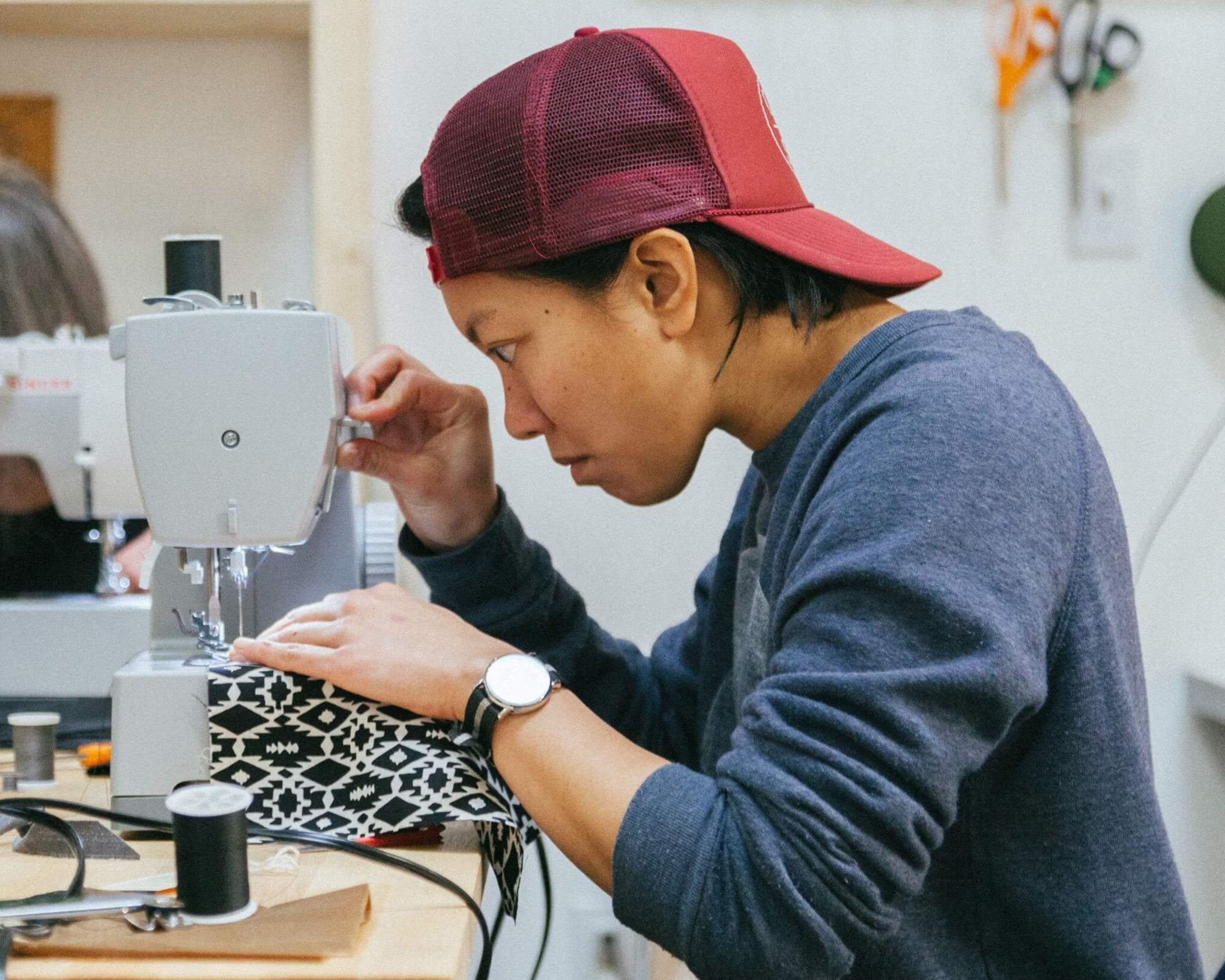
If you've literally never sewn a thing in your life but a little voice inside you is whispering that looks so cool, I wonder if I could do that? The answer is YES! You can absolutely do it.
Even folks who have been sewing for many years are often surprised to discover that bag making involves a different set of skills from other types of sewing, like quilting and garment making. In some ways it's a hybrid between sewing and something closer to woodworking or shoemaking. We work with leather! We use tools! We break the rules! We defy genres!
Either way, whether you've never touched a machine or you're ten years into quilting and bag-curious for the first time, start here.
Getting Started with Bag Making
Watch Ellie pull back the curtain below and demystify the making process. She walks through where to start when you've got no fancy machine and no prior experience.
What Makes Bag Making Different
Not many stitchers carry a hammer in their sewing kit, but we're working on changing that.

When you're sewing a garment, every question is about your body. How does it feel on me? How does it fit? Can I get in and out of it easily? A bag asks a different set. Is it durable? Is it comfortable to carry? Will it hold everything I need to haul around? Does it have enough pockets?
How your bag works is just as important as how it looks, and there's nothing more frustrating than a bag that malfunctions or is clunky to use. Ellie breaks the whole process down in The 4 Elements of Bag Design.
What Kind of Machine Should I Use?

A regular home sewing machine will be just fine. You don't need anything fancy or expensive, although if you have a machine like that, great! If you don't yet have a sewing machine, a couple of our favorites for beginner bag makers are the Singer Heavy Duty 4423 and the Janome HD 3000. You can read more about both, and about how to tell whether the machine you already own can handle it, in How to Choose a Sewing Machine for Bag Making.
You don't have to buy new, either. One of our favorite machines here came from Goodwill for $35. It's an old Janome, mechanical, no LCD screen, and it can sew anything we want to sew on it.
Machines sold as heavy duty are your best go-to, because they have a slightly stronger motor and a few more metal parts, so they pull thick fabric through more easily. But you don't need an industrial machine to make bags. All of our patterns are designed for home sewing machines.
Now, here's the one place a home machine will fight you. It might sew four layers happily and then balk at the one inch where a hem crosses a side seam. If you can't sew that inch, you can't finish the project, and that's one of the main reasons people give up on bag making. There are ways around it, from a walking foot to turning the hand wheel by hand to simply using a sharper needle. We go through all of them in How to Sew Thick Fabric on a Home Sewing Machine.
Start Small
How hard a project is has a lot to do with complexity: how many steps until it's finished. The other thing that makes a project hard is how big the pieces are, and whether you're wrangling a lot of fabric.
So we send people to the Portsmith first, a classic market tote bag that features water-resistant waxed canvas, a sit-flat reinforced base, sturdy leather straps, and double-cap rivets. You'll use this minimal, workhorse of a tote ALL the time. There are really only six stitches on the whole bag, and we've seen people whip it up who had never touched a sewing machine.
You will learn:
- How to sew heavy-duty fabric
- How to construct a reinforced envelope base
- How to finish seams with a zigzag stitch
- How to attach + reinforce leather straps
- How to set double-cap rivets
- How to remove a wonky rivet
The Bag Maker Starter Kit is the Portsmith with everything around it: the kit and matching thread, both patterns, a drive punch and punching board, plus the Portsmith online class and Sewing 101.

"As a complete beginner, the combo of kit, tools, and class was incredibly helpful. I'm a visual learner and struggle with new patterns, but I was able to easily make the bag and gain confidence."
—Lienne S.
Using Specialty Tools

To work with leather and hardware, we use a variety of specialty tools. We LOVE tools. As you become a bag maker, you'll fall in love with them too.
A household hammer is probably the most important non-sewing tool you need for bag making. For hardware you'll want a drive punch and a punching board to make the holes, and a granite slab to set rivets on. If you want to splurge, a Bakelite mallet.
Two more live in the nice-to-have column, and we reach for both constantly. A Rivet Removal Tool makes it so easy to remove wonky rivets, a real game changer. And a Steel Fabric Roller presses crisp, even folds in waxed canvas and other fabrics without needing to use an iron.
Learning to use tools is super empowering.
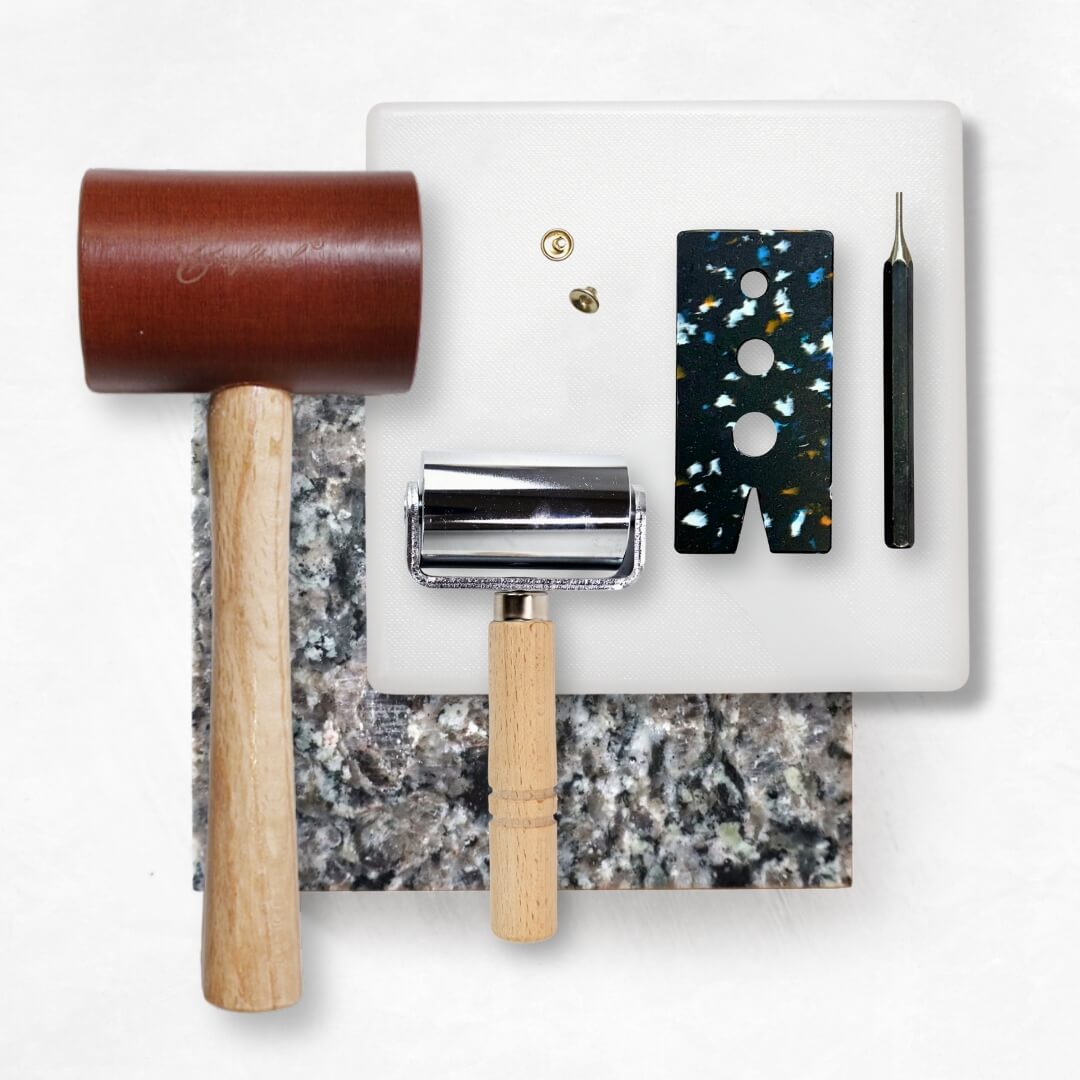
At Klum House, we're strong believers that you don't need a fancy sewing machine or expensive tools to make really amazing things. That said, you do need a few essentials in your toolbox.
Craft clips, because pins don't want to go through several thick layers. Denim needles in size 100, and change them often. A seam ripper, because we all make mistakes. Flat head pins, fabric pencils for marking, and all-purpose thread, which is plenty strong.
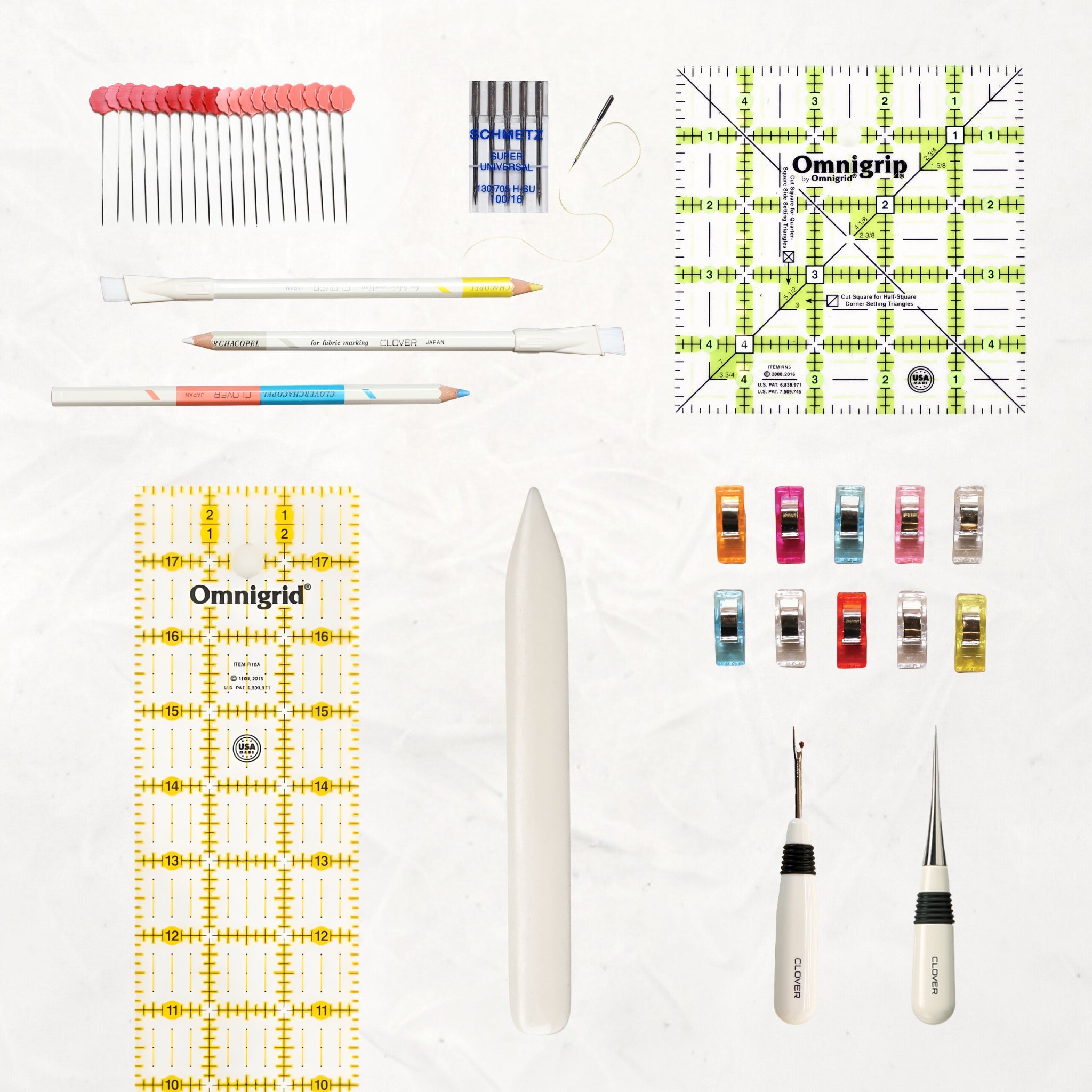
A long quilting ruler earns its keep too, since so much of bag making is marking hems and strap placement in a straight line.
Working with Leather

Working with leather and hardware is new territory for many makers, even if they've been sewing for many years. It's always so much fun to see folks venturing outside of their comfort zone and discovering they are capable of even MORE than they previously thought was possible.
Klum House-style bag making involves working with leather. We love the classic aesthetic of leather—its strength, its natural imperfections, how it only gets better with time. We use leather straps, handles, tabs, washers, zipper pulls, and more on our bags.
You can purchase pre-cut leather in our kits, or learn to strap, cut, hole-punch, and end-punch your own! You can even personalize your project with leather stamps.
You don't have to source any of it yourself, either. Want to use our fully-prepped leather straps and hardware but with your own fabric? Grab a pattern and a Leather + Hardware Kit and let's make it happen!
Working with Hardware
Here's the good news: we don't sew through leather on our home machines, we attach it with hardware! The most common type in our patterns is double-cap rivets, quick and easy to set with just a hammer. Reinforce them with leather washers so the metal can't tear away from the fabric over time, and your sewing machine will thank you.

Rivets, snaps, buckles, O-rings — these metal details are like the icing on the cake, adding weight, strength, and just a touch of sparkle to your finished bag. Hardware is the (very strong) glue that holds it all together, and every rivet tutorial we've filmed is collected in Bag Making Rivets 101.
You'll also learn to work with other types of hardware: tubular rivets, magnetic snap rivets, Line 24 snaps, Chicago screws, and more.
"Klum House kits take care of all the intimidating parts of bag making, like sourcing leather and hardware, so sewing is fun and stress-free."
—A proud new bag maker
Waxed Canvas: Our Favorite Beginner Bag Making Fabric
Waxed canvas is the original waterproof fabric, and it has body and structure, which is exactly what a bag wants. It's also easier to sew than it looks. The wax makes it slightly tacky, so two layers stay put on each other instead of slipping around. It barely frays. And you don't iron it, you finger press it, which means one less thing to set up.
Waxed Canvas


Dive Deeper
Every one of these goes deeper than this page does. ▶️ means there's a video.
- ▶️ How to Choose a Sewing Machine for Bag Making. Which machines we recommend, and how to tell whether yours can handle it.
- Essential Tools for Heavy-Duty Sewing. The full tool line-up, including needle choice.
- ▶️ Bag Making Rivets 101. Both rivet types, how to size them, and every tutorial we've got.
- ▶️ Leather for Bag Straps 101. Which leather to use, and how to make your own straps.
- ▶️ Essential Guide to Waxed Canvas. What it is, how to sew it, and how to care for it.
- ▶️ How to Sew Thick Fabric on a Home Sewing Machine. The walking foot, and getting through the bulky spots.
Ready to Get Started?
If you're just starting out and all of this sounds a little intimidating, don't worry! I promise, you can do this. It's easier than you think. If you're looking to dip your toe into bag making for the first time, the Bag Maker Starter Kit is a great place to start and features our popular beginner classic tote bag project, The Portsmith Tote. It's a beginner-friendly project with an amazing payoff!
About the Author
